“Only one thing is certain: anyone who says there are fundamental differences between the minds of humans and the machines of the future is mistaken..” He expressed this conviction in 2016. Marvin Minsky, considered the father of Artificial Intelligence (AI), in the speech he gave when he received the Frontiers of Knowledge Award in Information and Communication Technologies. Just two years later, it seems that this “future” could already be here. For several decades now, we have been witnessing advances in areas of science such as robotics, which are bursting into our daily lives to make our lives easier. In recent years, however, these machines have developed to such an extent that they are no longer limited to assisting us in certain tasks, but have completely eliminated the need for human intervention, even in the world of creativity and artistic activity.
Today we are going to study the implications this has for intellectual property. the creation of works by machines and the impact of Artificial Intelligence (AI) on copyright.
The Spanish Intellectual Property Law (LPI) Article 5 establishes that only the following may be considered author of a work the natural person that creates it; and considers as the only exception the possibility of recognizing the authorship of legal entities in certain specific cases, such as broadcasting entities (Article 126 LPI). This specific mention of natural persons excludes from its scope of application, and therefore from protection, those works created by machines or animals. The protection of the LPI will therefore not, in principle, apply to all creative and original works. per se; but only on those works that are attributable to a human being. And that is where the debate arises: should the emphasis be placed on the subject (author) who creates, or on the object (work) that is created? There are several examples of works created by animals that are of a higher “creative level” than many humans could hope to achieve.
In the case of works created by animals, it seems that the debate is now closed. And this is thanks to the famous selfie of the monkey “Naruto,” a self-portrait taken by an Indonesian macaque by triggering the camera he had stolen from photographer David Slater (Case Naruto vs. Slater). The animal rights organization PETA claimed authorship of the photo on behalf of the ape, as according to intellectual property law in the United States The author is the person who takes the photo, not the owner of the camera., and thus began two years of arduous legal battle. A battle that culminated on September 11 with the ruling by a San Francisco court acknowledging Slater's authorship by considering that Copyright protection cannot be applied to an animal..
The field of machines, however, remains subject to debate. Traditionally, robots were tools used by individuals to create a result based on data, information that had previously been “provided” to the machine. In other words: the robot It performed a specific task for which it had been previously programmed, serving as a tool in the same way that a paintbrush can. The real problem arises with the development of machine learning or machine learning, an algorithm that allows the machine, based on previously entered information and data, to learn from its own experience by developing behaviors and making your own decisions for those that have not been previously programmed. This is what happened with the famous Facebook bots that developed their own language that is intelligible to humans, which led their creators to quickly disconnect them.
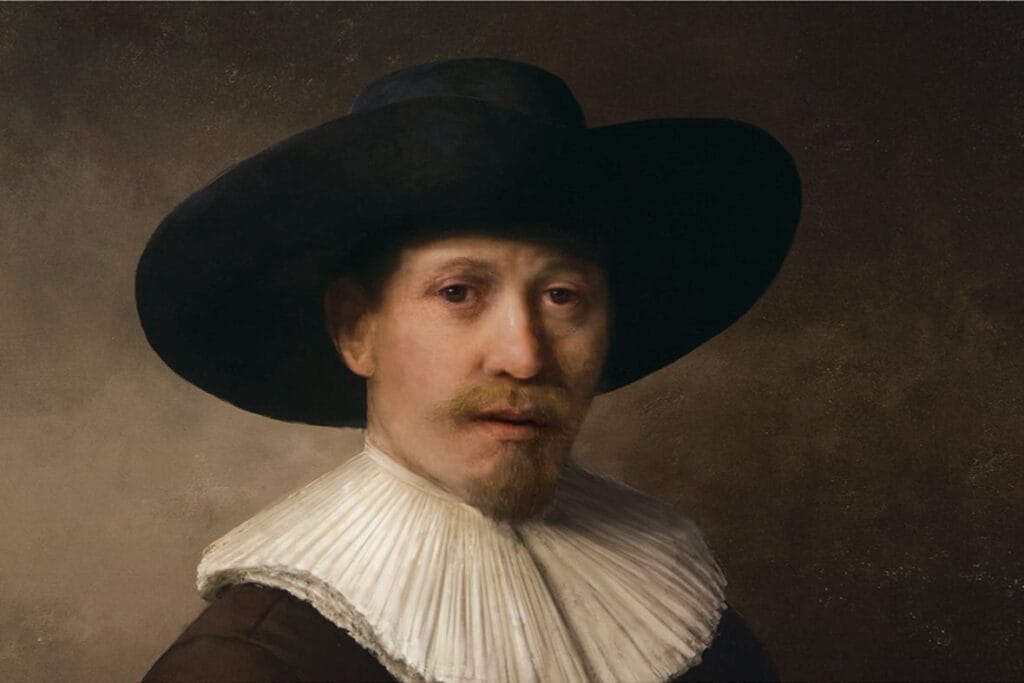
In the field of intellectual property, there are already machines capable of creating all kinds of artistic works. In 2016, a group of Dutch researchers presented what appeared to be an unpublished painting by Rembrandt at the Looiersgracht 60 gallery in Amsterdam. The painting had actually been created by a computer that had been taught the famous artist's most characteristic technique and style over a period of months, thanks to a machine learning system. had been able to create an original painting that perfectly imitates Rembrandt's pictorial style. Also in 2016, A Japanese programmer entered an AI capable of creating original novels into a literary contest.. And he didn't win, but he almost did.
Who do these original works belong to? This is really a question for which there is still no solution, and the answer will also depend on the legislation of each country. In Spain, as we have seen, the LPI only considers individuals to be authors and creations that reflect the spirit and personality of the author to be works (as we have already explained in this article, applied to photographs). The direct implication of not considering machines as capable of holding copyright means that their creations would be “free of rights,” that is, in the public domain, so they can be freely used by anyone.. This stance, unsurprisingly, is not well received by the creators of the software or computer program behind the machine, who invest significant amounts of money, time, and expertise (just as Slater spent months gaining the trust of the macaques in Indonesia) only to receive no return on their creations. We will have to wait and see how different legislatures address a problem that no longer belongs to the future or science fiction, but to the current reality and is constantly evolving. It seems that the most logical option would be to recognize the father of the machine as the author, granting him rights over the “creation of his creation.” If no rights are recognized for the creators of these machines, we run the risk of discouraging research into AI, which is directly opposed to the spirit of copyright.
[Article written by Patricia Fernández Céspedes]