Industrial design is a fundamental tool for companies seeking to protect the visual appearance of their products. If your company creates its own designs, it is essential that you know how to register and legally protect these designs, both in Spain and at the European level. In this article, we explain the key requirements and the most effective strategy for ensuring the protection of your designs, whether through registered or unregistered designs.

Basic requirements for protecting an industrial design.
Industrial design protects the external appearance of a product, that is, its visual characteristics resulting from the lines, contours, colors, shapes, textures, or materials of the product itself or its ornamentation (Art. 1.2 of the Law 20/2003, on the Legal Protection of Industrial Design).
For a design to be eligible for protection, it must meet certain requirements. Here are the main ones:
- New.
The design must be completely new. This means that no identical design may have been disclosed previously.
A design is understood to be disclosed when it has been made available to the public (i.e., if it has been published, exhibited, or marketed), unless it is reasonable that it could not have become known in the normal course of business by the specialized circles of the sector concerned, operating in the European Union. However, as almost everything is now disclosed via the Internet, it is no longer so common for a design to be disclosed outside the European Union without it being reasonable to assume that it has become known to the specialized circles of that sector in the Union (as explained in great detail in these criteria of European registration offices to assess the disclosure of designs on the Internet).
With regard to identity, a design shall be considered identical to another when its characteristics differ only in insignificant details.
- Unique character.
The design must have a unique character, i.e., a design that produces the same overall impression on the informed user cannot have been previously disclosed.
This is where the user's perception comes into play. When comparing the design with existing ones, they must consider that it is something different.
The “informed user” is a fictional person, an intermediate figure between the “average consumer” in terms of trademarks (who does not necessarily have any specific knowledge) and the “expert in the field” of patents (who has extensive specialized knowledge). This is a person who, without being an expert in the sector, is familiar with its products because they are a frequent consumer or because they are more accustomed to their characteristics than the average person. They are someone who “is familiar with the different designs existing in the sector in question and has a certain degree of knowledge about the elements that such designs normally contain” (Judgment of the CJEU of October 20, 2011, Case C-281/10, case Metal rappers).
- Aesthetic rather than technical in nature.
Design cannot be determined solely by its technical function. This means that aspects of the product that are defined solely for functional reasons cannot be registered as designs. For example, if a specific shape of the product is essential for it to function, that shape cannot be protected by industrial design.
The reason for this prohibition is to prevent industrial design protection for products that should be protected by patents or utility models, which have a shorter duration.
If at least one of the appearance characteristics of the product is not dictated solely by its technical function (i.e., if at least one of the characteristics of the product is purely aesthetic), the design will be valid (provided, of course, that it is novel and has individual character).

Harmless disclosures: the grace period.
An important aspect of industrial design legislation is that disclosures made by the creator themselves (or by a third party with their consent) within the previous 12 months will not affect the novelty of the design.
This is known as the “grace period” and is covered by both Spanish legislation and European regulations (Regulation 6/2002 on Community designs). This period offers companies a certain degree of flexibility, allowing them to assess the commercial impact of their products before deciding whether to register the design.
Please note that disclosures made before 12 months do affect novelty, even if they are made by the creator themselves (similar to, but without a grace period, as is the case with patents).

Duration of design protection.
The protection of a registered design lasts for five periods of five years, up to a maximum of 25 years. This provides long-term protection for companies that decide to invest in this type of registration.
However, there is also the concept of unregistered designs, which grant protection for three years from the date of the first disclosure of the design in the European Union. This type of protection is very useful for companies operating in sectors where products have a short life cycle, such as fashion or technology.

Classic strategy for protecting designs: example in the fashion industry.
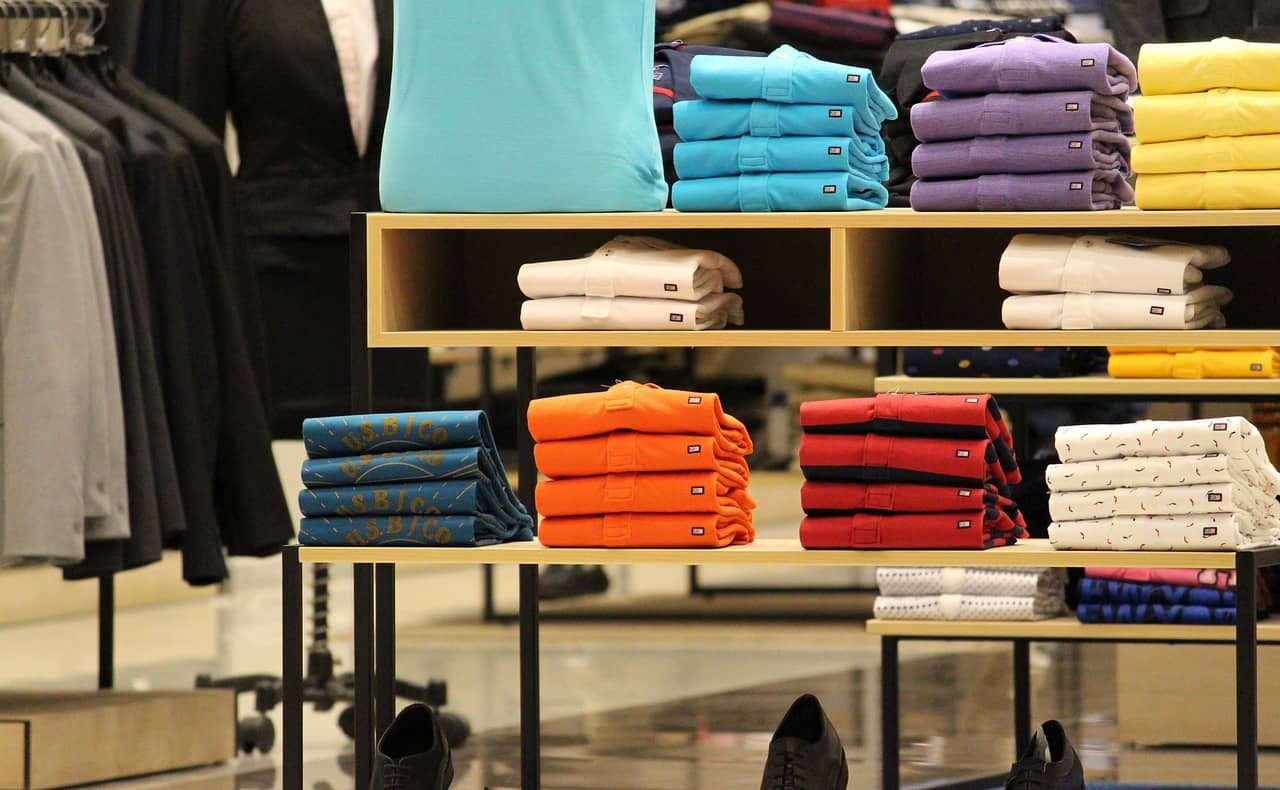
Let's take the case of a fashion company. Each season, it launches a new collection of its own products that are unique in their design. Suppose the company decides to publish these designs on its website, which would constitute public disclosure. From that moment on, the design automatically enjoys protection in the EU as an unregistered design for three years, provided that it meets the requirements of novelty and individual character.
This initial three-year period provides companies with an important advantage: they can observe how the market responds to their designs before deciding whether or not to formally register the design. If the design proves successful and is expected to remain in use beyond the first season, the company may consider registering it within the first year to obtain protection for up to 25 years.
Registration within the first year is crucial because, if this deadline is exceeded without registration, the design will lose its novelty and therefore cannot be registered later. In this case, the company would have to settle for the 3 years of protection for unregistered designs in the European Union.
Pre-establishing proof of first disclosure is important in order to have evidence that, from that moment on, the three-year protection period in the EU as an unregistered design began.
In summary, the classic strategy is:
- I launch my product on the market (I promote it) and see if it works.
- If, within one year, the design has been successful and is expected to remain on the shelves for more than one season, I will consider registering it. I can only do this within that first year. This will give me protection for up to a maximum of 25 years.
- If it is a single-season product or if it has not been as successful as expected, not registering it will mean that it will have three years of protection in the EU as an unregistered design from the date of first disclosure.

Bonus track: possible protection accumulated by copyright (intellectual property) and/or trademark rights.
The fact that the design of a product can be protected by industrial design does not exclude the possibility that it can also be protected by other means.
First, by copyright (intellectual property). Intellectual property protects original works, that is, those that have creative merit and represent an intellectual effort by their author, reflecting their personality in the work (more info on this concept here). The concept of originality is different and goes beyond that of novelty and uniqueness. However, in some cases, it is possible to accumulate both types of protection. These are products that have been referred to in case law as “works of applied art.” Some examples of rulings, here (case Cofemel) and here (case Brompton Bicycle).
And secondly, by trademark. A trademark is a sign capable of distinguishing a company's products and services from those of its competitors. That is the essential function of any trademark: to be distinctive or differentiating. In other words, to be able to evoke in the consumer the business origin behind the product. Our trademark regulations (both Spanish and European) expressly allow the registration of three-dimensional trademarks. A 3D shape (the shape of a product or its packaging, for example) can constitute a registered trademark provided that it has that distinctiveness. This is not always easy, and normally this distinctiveness is acquired over time (known as distinctiveness acquired through use or secondary meaning); but it is a form of protection that can be perfectly combined with that of industrial design. It should be noted that the requirement of distinctiveness is stricter and more complex to meet than that of novelty and uniqueness; but this makes perfect sense, insofar as the duration of trademark protection can be unlimited in time (10-year periods renewable indefinitely), while a design is limited to a maximum protection of 25 years.